
Glitching the Threshold
Although the SST project formally ended in December 2025, we are very happy to continue receiving proposals for contributions to this platform, which has clearly filled a gap for researchers, artists and practitioners working at the intersection of popular music, sound and technology, as these fields come together within the diverse sound system cultures found across the globe. We are therefore pleased to host this extract from a longer piece by artist and researcher Alice Otieno, documenting her personal journey through the baile funk scenes of Rio de Janeiro and São Paulo drawing inspiration from glitch and remix culture, sound systems and the politics of noise, silence and in/visibility.
by Alice Otieno
Introduction
The following text and images are an excerpt from a larger essay exploring the dispersion of baile funk music from its origins in Rio De Janeiro to later iterations of the genre in cities such as São Paulo. Drawing inspiration from theories across glitch and remix culture, sound systems and politics of noise and silence, the essay documents the social and geographical conditions of cities that have contributed to funk’s existence over time.
Text and images gently approach the topic of documentation with the overarching theme of an “un-documented photo essay”. It considers how we can (and cannot) capture an event where photos are often forbidden or restricted. While researching for the essay, I have been particularly intrigued by the tension that exists across funk sound systems whereby photography is typically highly restricted or totally banned, due to the genre’s tension surrounding criminalisation across the country. However, it isn’t unusual to see MCs and DJs utilising social media platforms such as Instagram or Tik Tok to promote the events. And in such cases, photography is used. I’m interested in the ways that the digital space has facilitated for funk to gain notoriety beyond Brazil. To cite Legacy Russell: underground spaces in night life music scenes and the internet serve a similar purpose. They provide a playground where identities can experiment and recontextualise new spaces for existence (Russell 2020, 36).
My images attempt to capture the essence of Rio and São Paulo, focusing more on the topography of the cities rather than photographing the bailes themselves. Images are taken between November 2024 to 2026.
“não tá mais produzindo, tá fazendo bruxaria” — DJ K
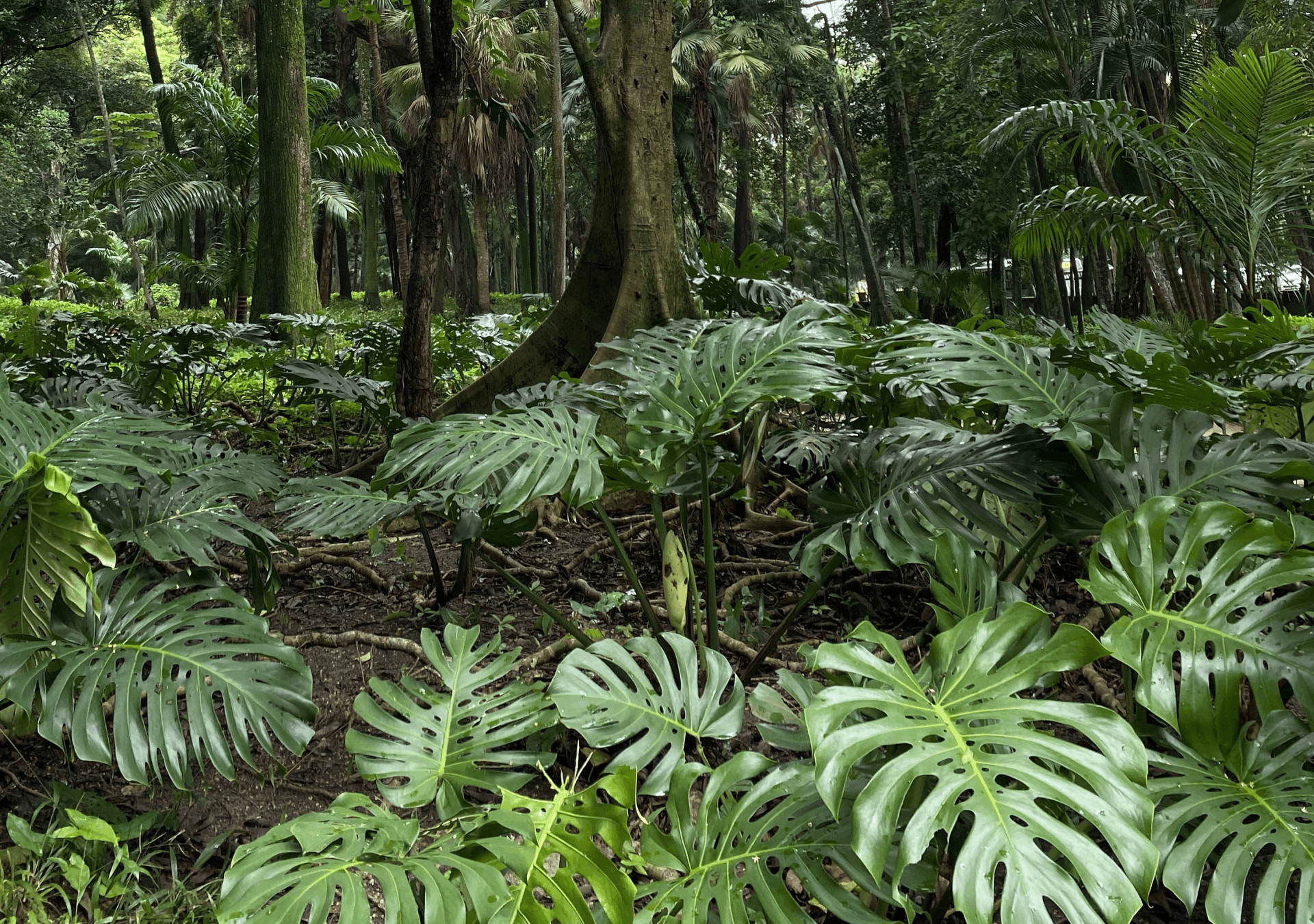
Tijuca National Park, Rio March 2026
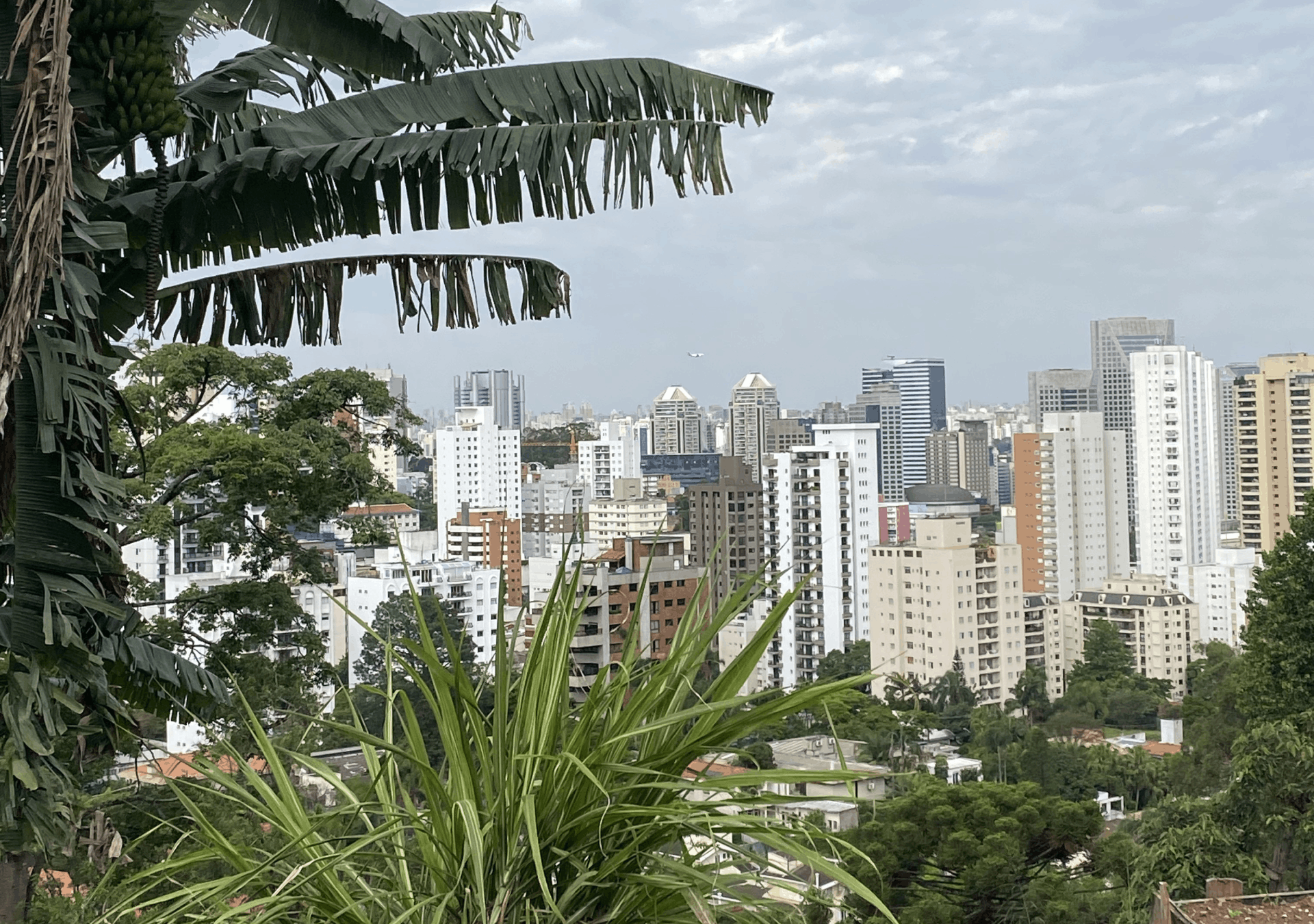
Morumbi, São Paulo, November 2025
Glitching the Threshold: On Politics of Noise And Silence in Rio De Janeiro and São Paulo’s Baile Funk Scenes
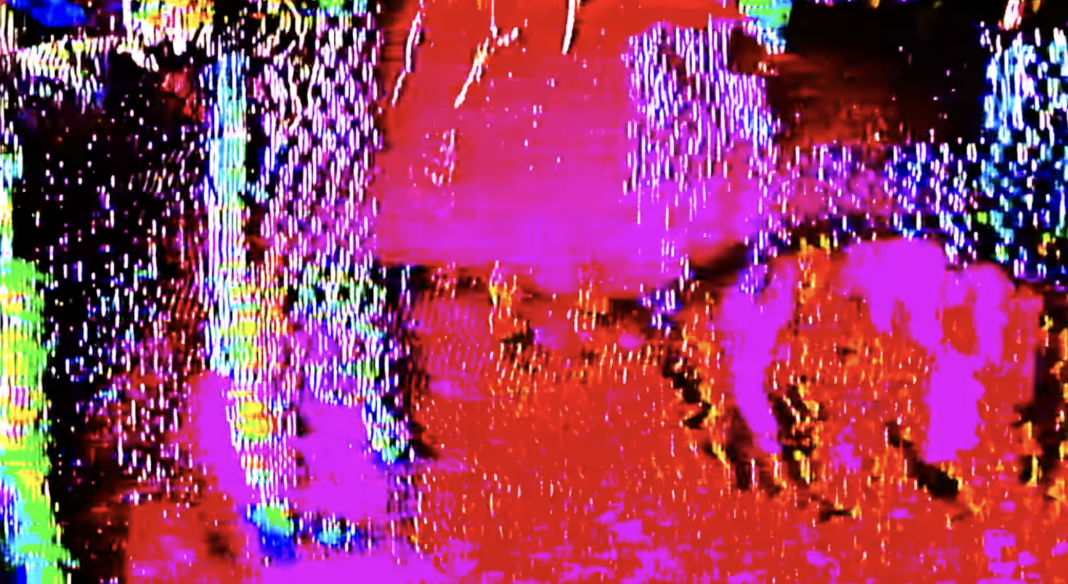
Terror Mandelão, directed by GG Albuquerque, Felipe Larozza (2024)
“Glitch is all about traversing along edges and stepping to the limits, those we occupy and push through, on our journey to defining ourselves. Glitch is also about claiming our right to complexity, to range, within and beyond the proverbial margins.” — Glitch Feminism, Legacy Russell
“The revolution is magical because it is that which is unpredictable within the dominating reason.” — The Aesthetics of Dreaming, Glauber Rocha
On this particular Sunday, a different type of Church takes place. In the early morning hours, the baile [1] begins.
Congregated around the sound system, we await a procession of drums, remixes, samples and re-samples. Heavy beats pulse through the meandering hills. Audio clippings from popular music spanning across Brazil, The Americas and Europe accompany them. Space is negotiated between vendors, dancers, motorcycles and on-lookers. The air is hot, sticky—humid. As each hour passes, the crowd grows and the music increases to piercing volumes.
How does one capture a moment where documentation is permitted?
In today’s techno-first surveillance society, it presents itself as almost counter-cultural to attend such an event and not reach to record it in some way, shape or form. Though in the last few years, following the shaping of a post-URL-post-pandemic world, intentional listening spaces have begun carving out policies where documentation is restricted, here, the rules aren’t governed by curatorial parameters.
Before going to the party, we were clearly instructed as to what is and isn’t allowed. The bailes are run by a strict internal code, only known if you live there or if you are told by someone else who lives there. No photos, no phones out. Just find your spot, listen to the music, dance, sweat it out, and go home. Somewhat disorienting at first, I eventually surrendered to these parameters, allowing the present state necessitated by not having access to a documentation device to ground me in the place.
All that remains as a trace to the moment are hazy memories, faint hums of songs I heard and a slanted image I took as we departed.
It isn’t unusual for these events to end at 9 or 10am in the morning. Not long passes before we look back from the main stage and notice the sun slowly rising to announce day break.
We make our way back down to the main street and are immediately introduced to a very different landscape. Dawn is announced with birds singing melodic songs. Subtle footsteps are heard from early risers jogging along the Zona Sul [2] strip. Every so often motorcycle beeps and cars collaborate in a cacophony of early traffic noise.
Cafes begin to open.
Indistinct chatter fills the streets.
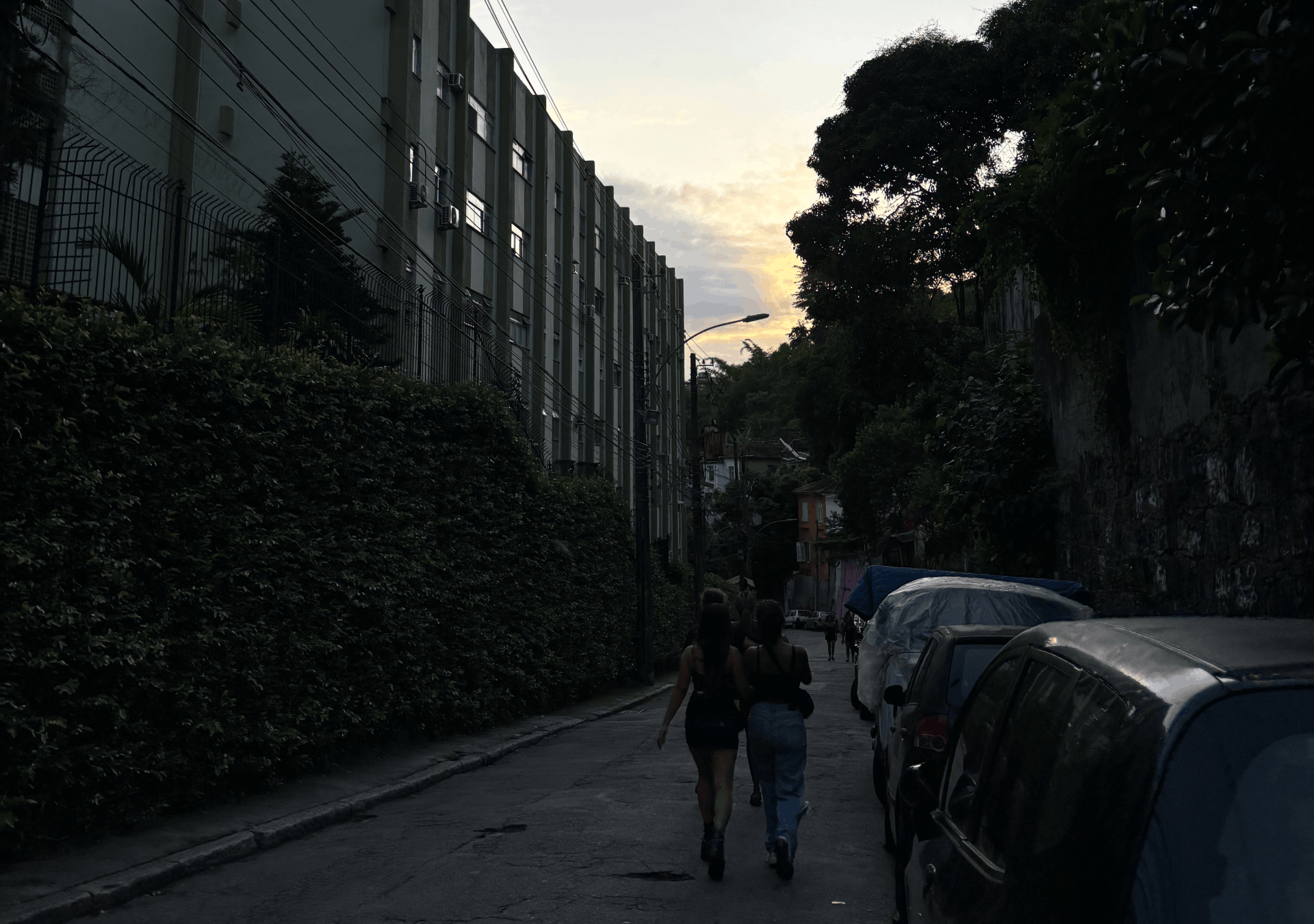
Leaving Baile do Santo Amaro at sunrise in Rio De Janeiro, November 2024
Since the breakout of funk music in the 70s, the genre has evolved and spread within Brazil and worldwide, with peaks and reinterpretations influencing other underground and mainstream genres. Funk Brasileiro, funk carioca [3] (funk originating from Rio de Janeiro) or as it’s most commonly known today, Baile Funk, is derived from Miami Bass, influenced by tourism and distribution of music records by Rio based DJs from the United States to Brazil. In its foundational form, funk combines elements from Miami Bass and Hip-Hop with Afro-Brazilian drumming patterns from Candomble, Samba and Capoeira songs. Its evolution introduced the likes of MC Marcinho, DJ Marlboro and record label Furacão 2000 to the forefront who contributed to funk’s popularisation in the early 00s.
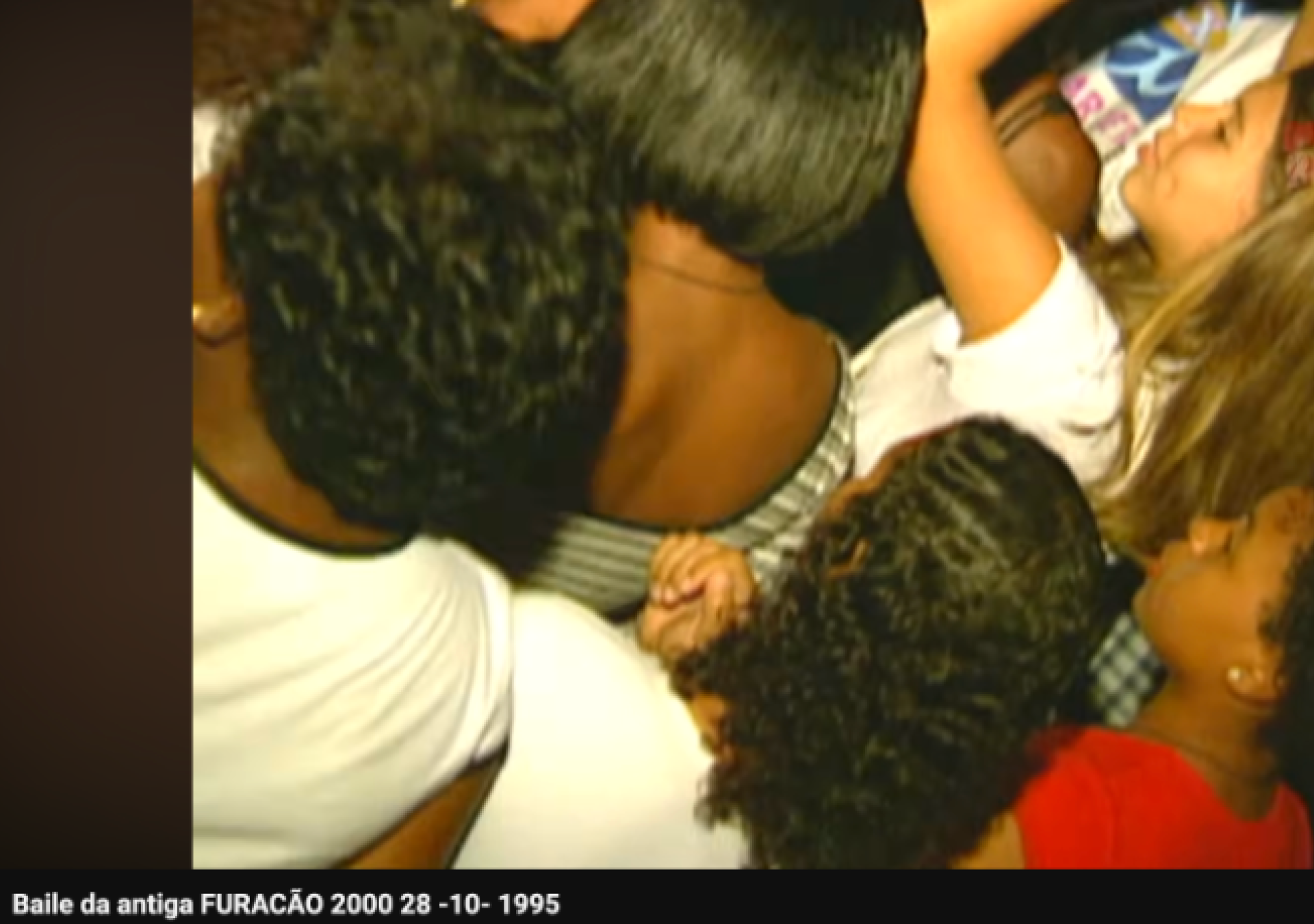
Screenshot of an early 2000s baile show hosted by pioneer record label of the genre Furaçao 2000
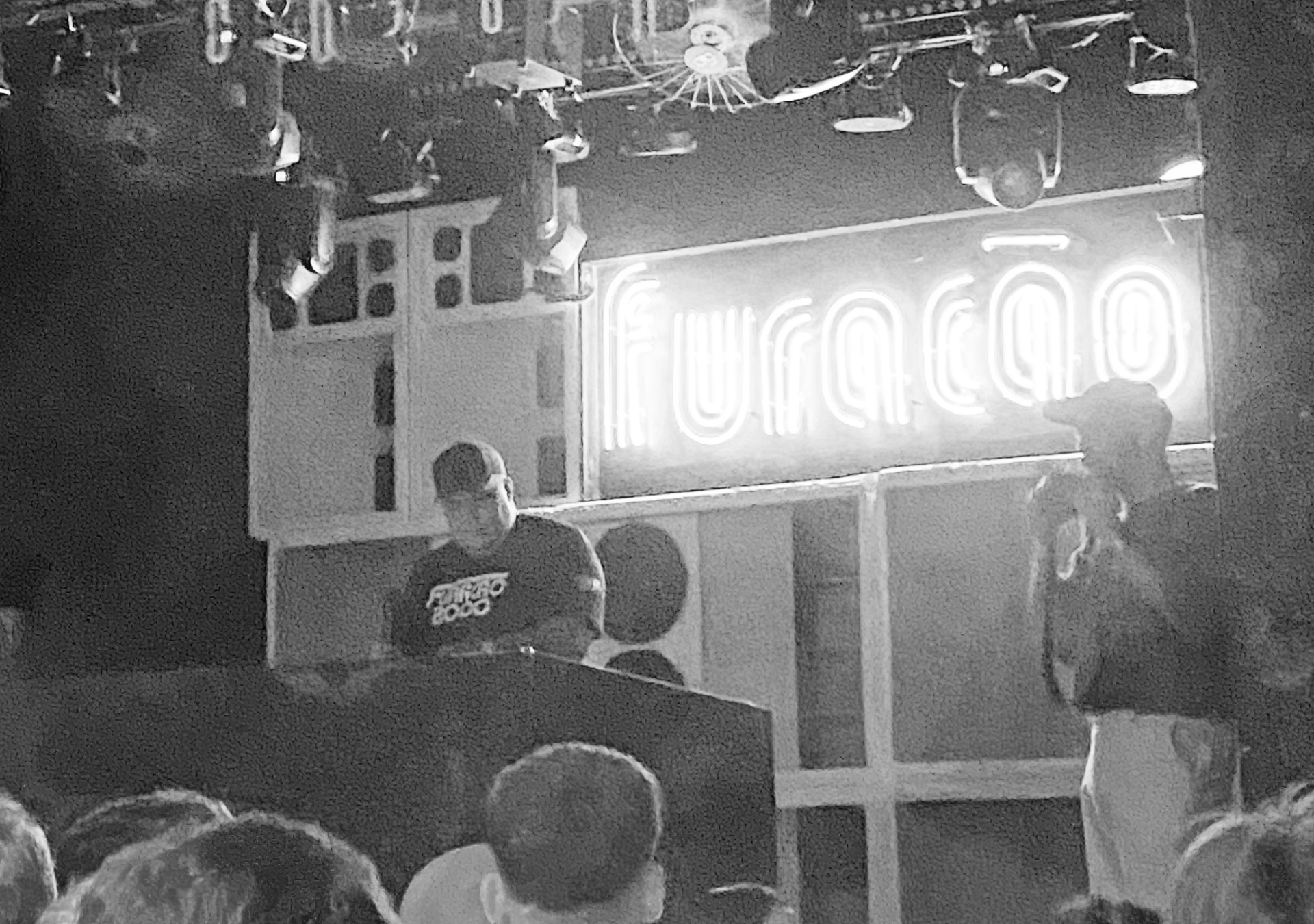
Furaçao 2000 performing in Leblon, Rio De Janeiro March 2026
Over the last two decades, the genre has gained popularity across Europe and The Americas with songs such as Bum Bum Tam Tam by MC Fioti, Bumbum Granada by Mc’s Zaac & Jerry Smith and Vai Malandra by Anitta. Most recently, a spike in tourism to the country brought in a new wave of intrigue, this time with more variations of the genre surfacing: Funk Bruxaria (Witchcraft Funk), Automotivo, Brega Funk (regional to Recife), Funk Mandelão, MTG (Funk Montage) to name a few (see also this blog). Despite the genre’s complicated history between state and marginalised people, its infectious energy makes it difficult to contain. As an outsider looking in, it can be easy to romanticise the foreignness of the sound or the bailes without deeply understanding the conditions that contribute to its existence. Music, like other art forms, isn’t politically or socially neutral. And with art forms tracing back to black, brown and indigenous people as the pioneers and forerunners, such conditions are more often than not, uncompromising. The arts, in such cases, serve as survival, expression and at times, escapism.
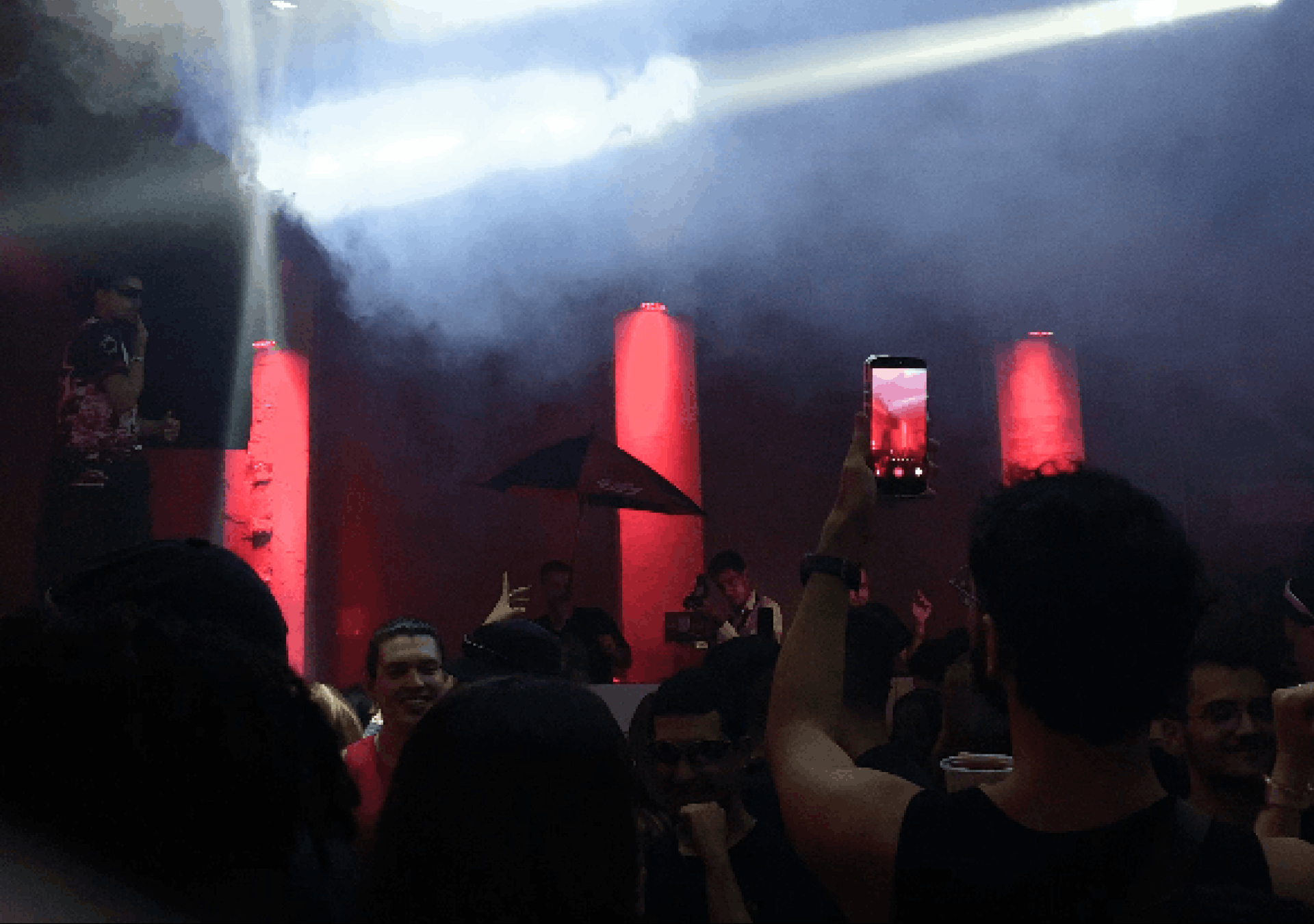
Photo screenshotted from a video I captured during a night out in Central 1926 in Sao Paulo, November 2025. The umbrellas during the sets are a characteristic accompaniment for funk emerging out of Sao Paulo (see: Funk Paulista sub-genres of Funk ostentação, Funk Mandelão, Funk Bruxaria, Funk Automotivo)
To appreciate a genre and movement such as funk one must consider the spatial, geographical, body and cultural politics that influences its origin and continued evolution. In this text, I hope to piece together some observations and conversations during my visits to Brazil along with secondary research that documents funk’s history and present state. I’m interested in exploring the genre using themes surrounding noise, silence, glitch, and remix culture.
The main intention of this piece is to get an understanding of funk’s growth beyond Rio De Janeiro and how its present glory contends with the increasing use of AI across the arts.
Funk introduces a listening experience that pushes audiences to engage with and challenge the limitations of sound. It’s interesting to observe how a genre with experimentation and improvisation at the forefront can be admired alongside the insistence of flattening from the machine. With layered, chopped up, screwed and re-remixed songs, funk implores us to flirt with listening beyond auditory comfort zones. It asks us to re-consider: what role does obscuring the record, trembling the note, play in our understanding of the world, ourselves and others? And what’s particularly intriguing, in a time where AI insists on legibility, but in the process strips the heart of what makes something human, the principles of funk music strike as a disruptor, to reimagine what can exist when we collaborate with the friction, error and glitches of the machine, and how these frictions often reflect ruptures present in our world.
On Experimentation & Sonic Possibility
“A scene that grapples with the unbearable. A stop. There is syncopation. Geographies start and stop. A beat continues.” — Keguro Macharia, Abolitionary Listening: To Listen Differently, Away From Sonic Certitude
In Legacy Russell’s seminal text, Glitch Feminism: A Manifesto, she explains the core tenets of glitch theory and how for people who either exist or have been placed at the margins, glitch becomes a component in reinventing outside societal norms. Legacy utilises the term glitch and inverts what is otherwise defined as “errors” within computers, code or algorithm systems into open grounds for refusal and reinvention. The text looks through the lens of digital culture, performance, gender and body politics considering glitch as a tool to create new spaces to inhabit for oneself. Throughout this essay, I’m using the theory of glitch to explore the possibilities that are made available when we erase boundaries of normalcy imposed on our bodies, environments or that we impose upon ourselves when considering the boundaries between “noise”, “sound” and “music”. Inspired by Legacy and other writers within the field of glitch theory, I am intrigued by redefinition of words that insist upon concretising what is right and wrong. In this case, re-defining what we consider as an “error” makes room for experimentation and improvisation, both of self and musically.
The characteristics of glitch closely resonate with those present in the underground, seen in a genre and movement such as funk. The underground, defined as a space where exploration and performance are experienced. And as noted in the book, the underground in physical spaces, especially in music, is closely tethered to that of the digital space.
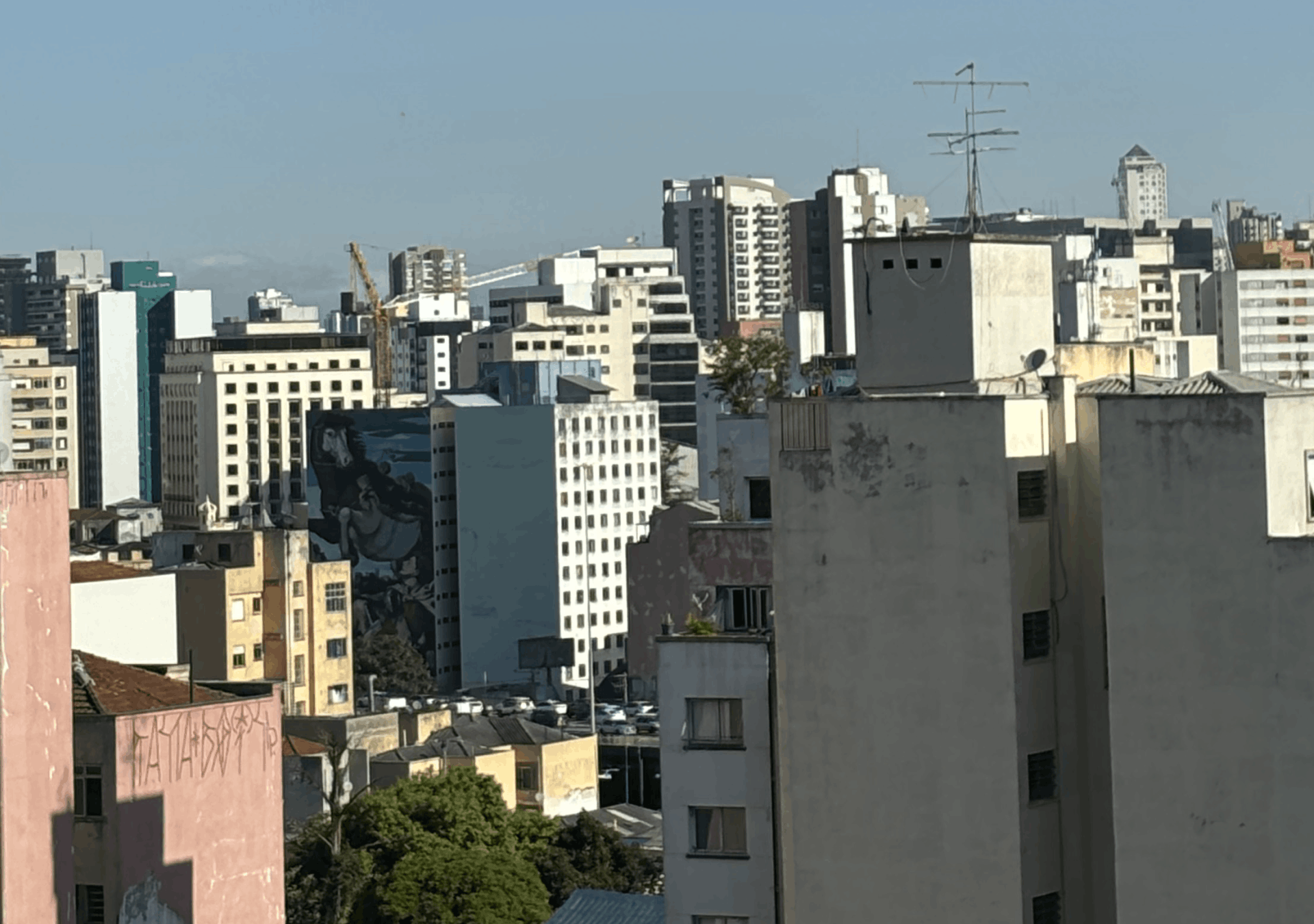
São Paulo, view from Bela Vista, November 2025
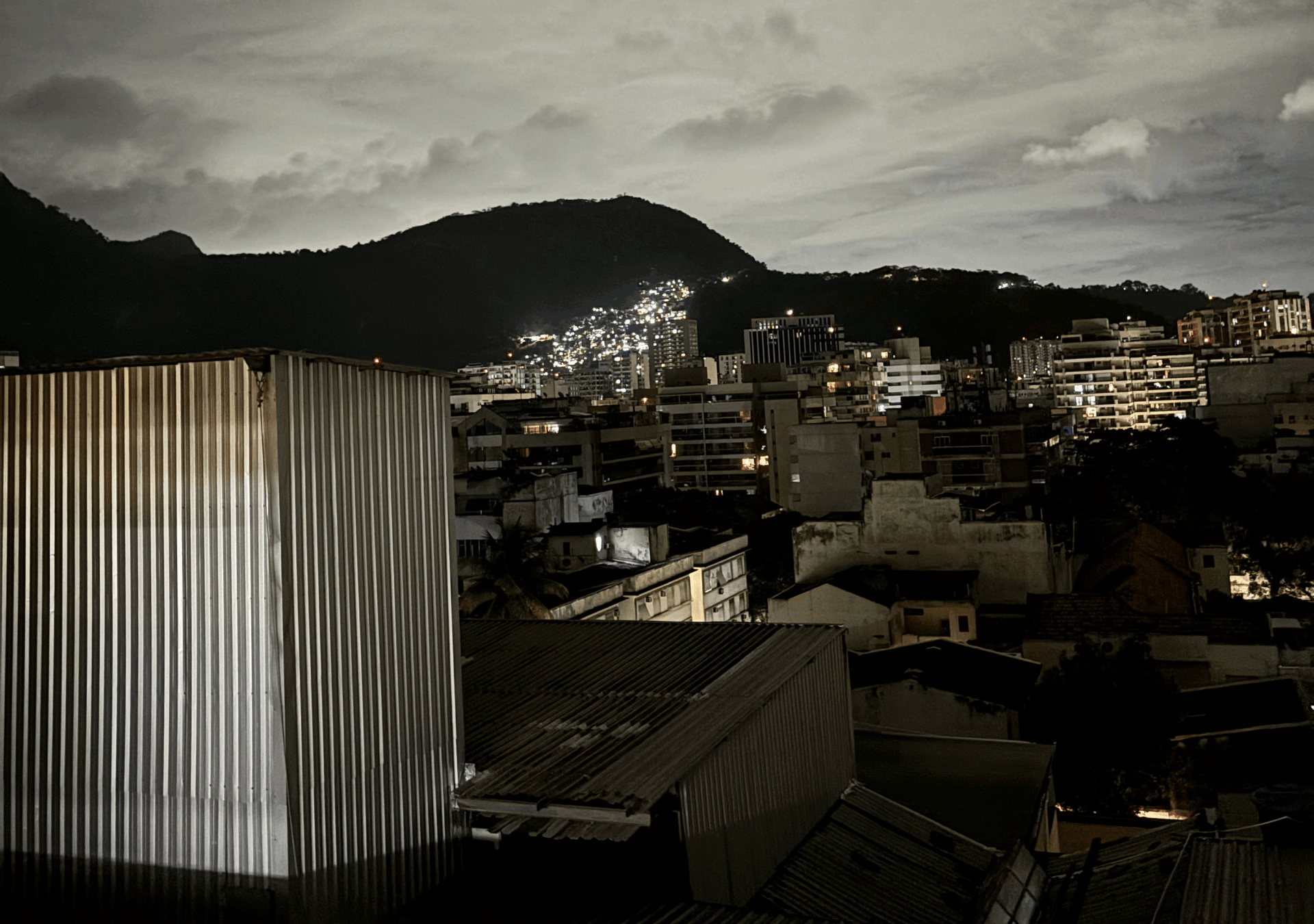
Rio De Janeiro, Ponto Cego Galeria event in Botafogo November 2024
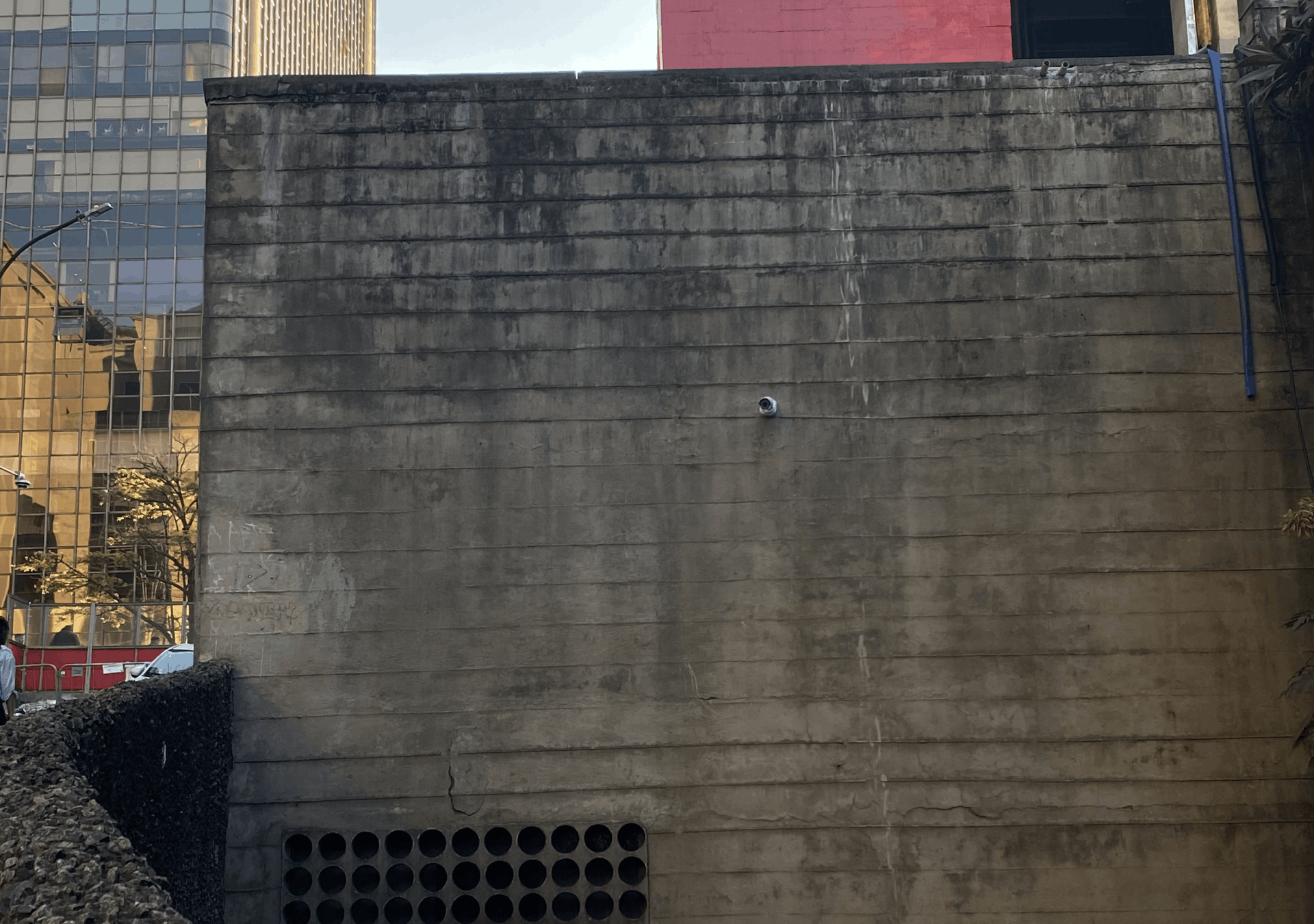
São Paulo, Bela Vista, November 2025
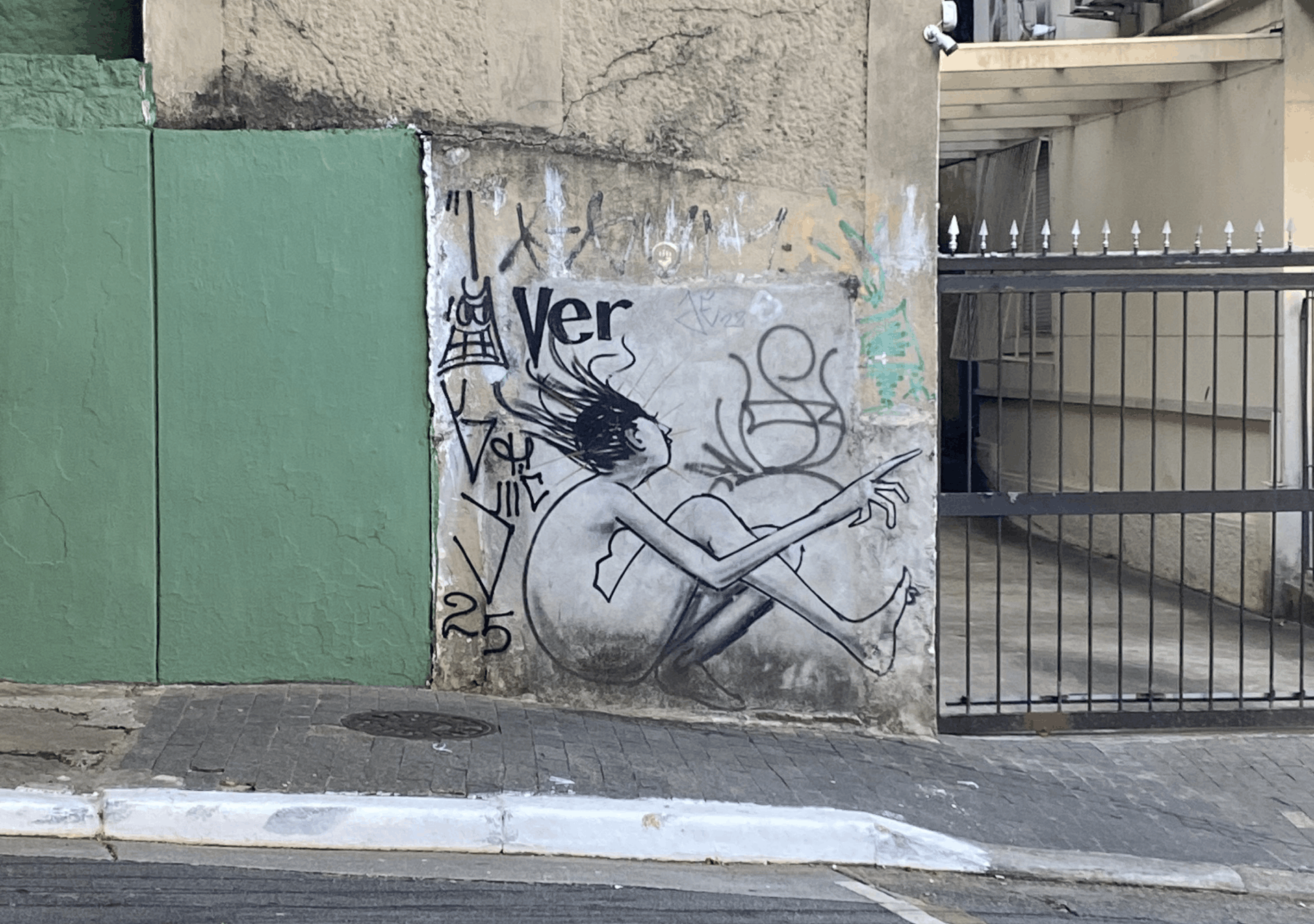
São Paulo, Bela Vista, November 2025
An Other-space where binaries collapse and one can unravel themselves without limitation, scrutiny or violence. In funk, a dance between The Machine, The Bailes, and people who create and occupy them demonstrates a case study for glitch in practice.
Glitch in funk isn’t just demonstrated within expressions of the genre present in today’s leading tracks and producers. Along with influences from Miami bass and Hip-Hop, funk’s foundational rhythms finds roots in Afro-Brazilian expressions of Samba de Roda and Capoeira, where the essence of dance and musicality display their own form of “glitch”—in philosophy rather than aesthetics or musical sensibility. Once banned in Brazil, Samba and Capoeira were birthed as a means of safety and preservation of culture from slaves who were brought from African countries of Angola, Benin, Nigeria and Ghana. The two art forms delicately move between forms of dance, spirituality, fight and song. With musical components such contra tempo [4 (“against time”) in Samba or the foundational move of the Ginga [5] (depicted as the jester or tricker) in Capoeira, it isn’t out of place that a genre influenced by these art forms also embodies such a refusal.
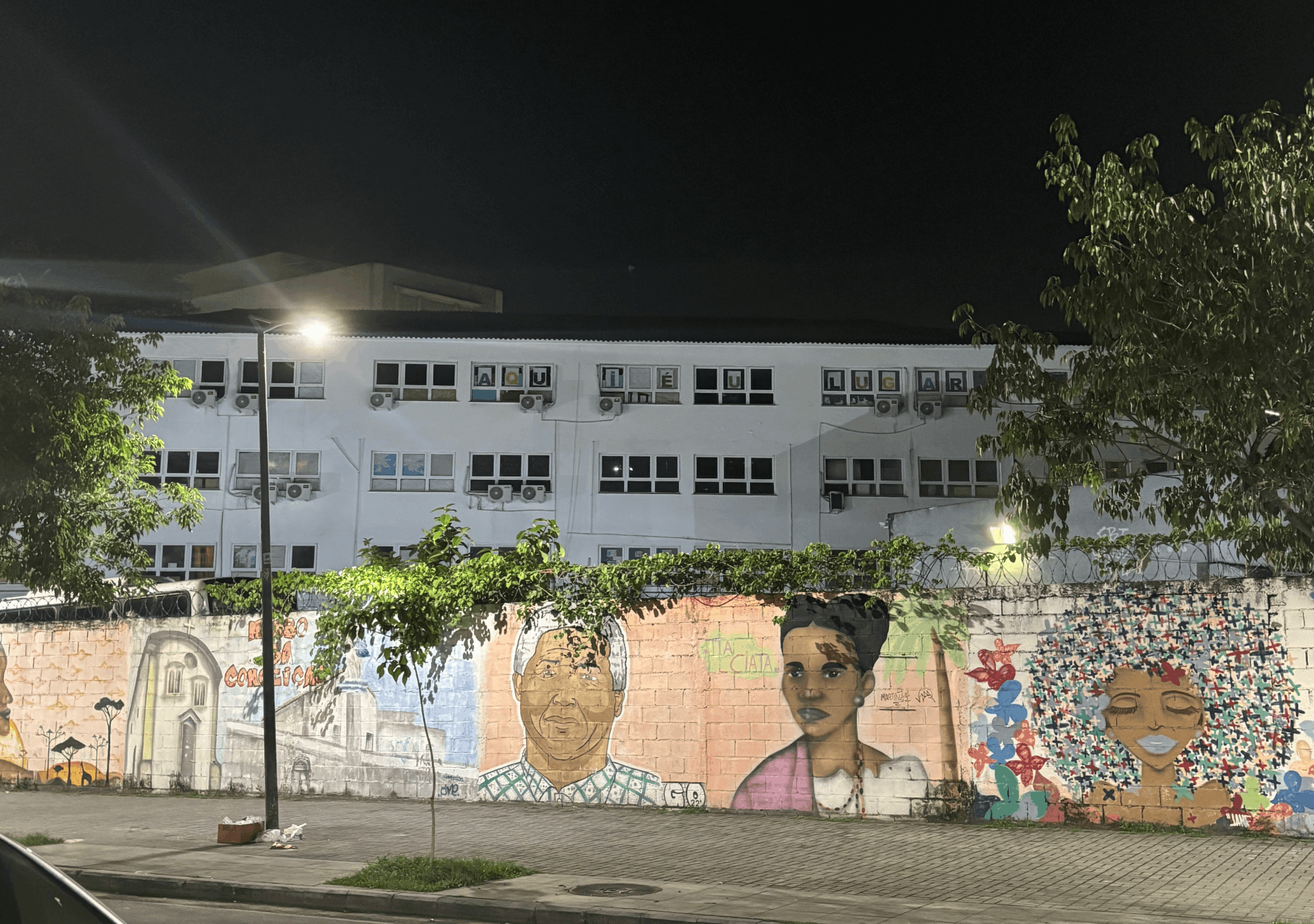
Rio De Janeiro taken after Pedra do Sal, November 2024
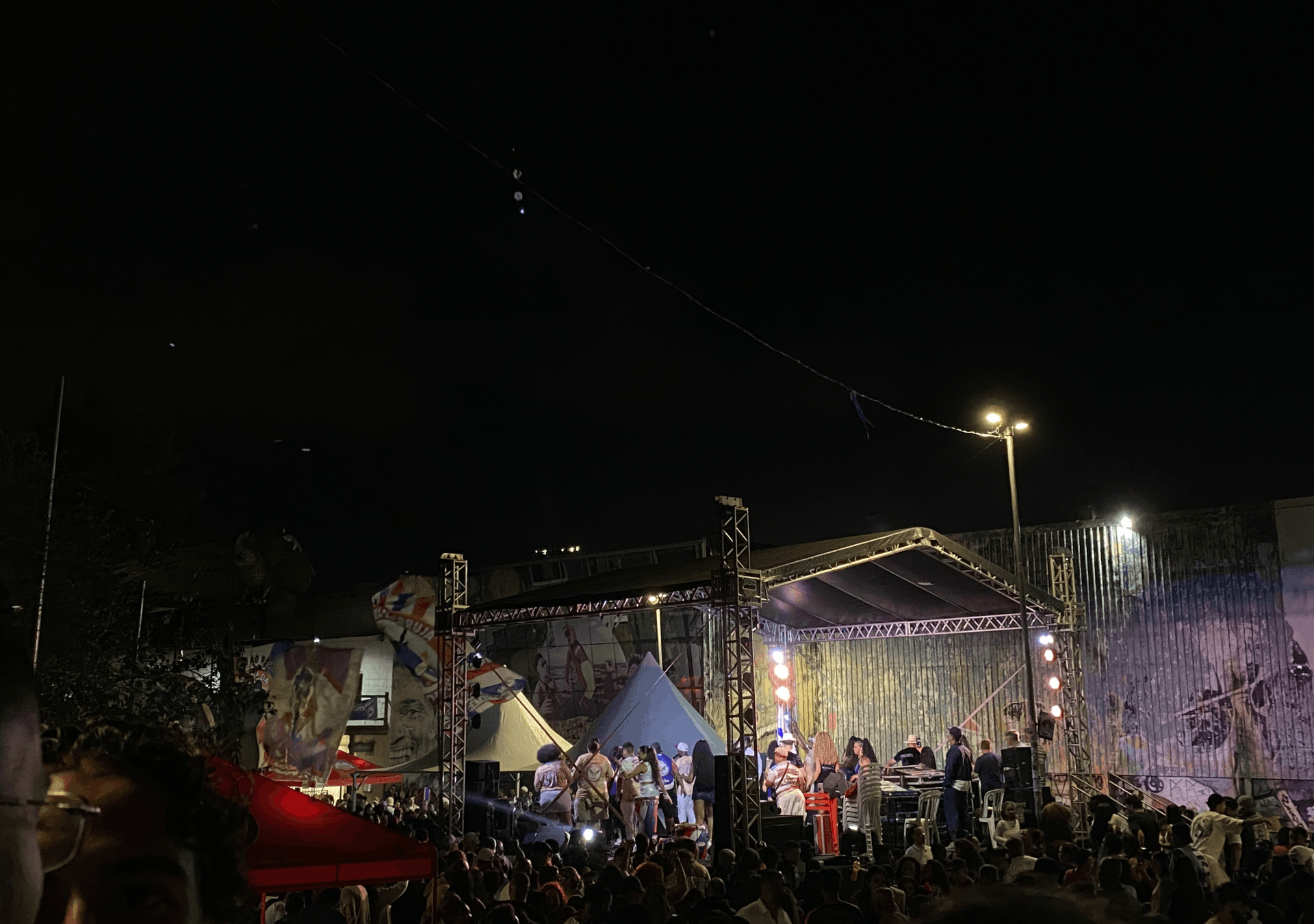
Samba Rehearsal Performance near Grajau Cultural Center São Paulo, November 2025

Madureira Pagode, Rio De Janeiro, March 2026
About the Author:
b.1999 in Mombasa, Kenya and based in the UK, Alice Otieno is an interdisciplinary artist and creative strategist whose practice moves between research, visual culture, and public engagement. She is preoccupied by ideas surrounding: faith, silence, the void, language, movement as a vehicle for living a more embodied life, sound and its uses in connecting us back to our ancestral or natal homes.
Notes:
[1] Baile, literally translates to “dance” in Portuguese. But in this context I am using it to refer to parties that take place in the favelas where funk music is typically played.
[2] Zona Sul translates to the “South Zone” of Rio De Janeiro. It is one of the twelve municipal divisions established in the city’s Strategic Plan, made up of the neighborhoods Botafogo , Catete , Copacabana , Cosme Velho , Flamengo , Gávea , Humaitá , Ipanema , Jardim Botânico , Lagoa , Laranjeiras , Leblon , Leme , Rocinha , São Conrado , Urca and Vidigal.
[3] In Brazil Baile Funk refers to the genre of music as well as the parties where the music is played.
[4] Contra tempo is a step in samba whereby you move your feet backwards and then forwards again. Creating an intentional “out of time” sequence.
[5] Ginga translated to “sway” is the foundational move in capoeira whereby you prance or shuffle from left to right. It embodies a cunning sensibility preparing the players to make elusive moves when faced with their opponent.
References:
Russell, Legacy, 2020, Glitch Feminism: A Manifesto, p. 22- 36.
Rocha, Glauber, 1971, The Aesthetics of Hunger and The Aesthetics of Dreaming, Columbia University, New York January. (https://www.documenta14.de/en/south/891_the_aesthetics_of_hunger_and_the_aesthetics_of_dreaming)
[3] Cole Carson, Artur, Kalule Petero, and Kanngieser AM, 2021, Abolitionary Listening: Propositions & Questions (https://www.researchgate.net/publication/368522093_To_Listen_Differently_Away_from_Sonic_Certitude_Some_Propositions_Some_Questions)
[4] Mateus Araújo de Chagas, Helena, 2025, The Train, the Sailboat, and the Idyllic Province: the Road Songs of Clube da Esquina
Films, Videos + Diagrams
Terror Mandelão, directed by GG Albuquerque, Felipe Larozza (2024)
Baile da Antiga, Furacão 2000 (1995)
Playlist:
https://open.spotify.com/playlist/1O6lzudai8AkdH6fsWKITs?si=d7ca5b9d92cd4bb9