
Musical Youth Pt 5: Young reggae artists, producers and radio DJs
We are pleased to host on the blog the fifth and final instalment of Musical Youth: Young People in Reggae, a series by Becca Leathlean (see the latest entry). The contributions published so far have explored the longstanding impact of reggae music on the British cultural landscape, with a particular focus on the practices, aspirations, and motivations of young people engaging with the music in its many forms. In this final piece, we hear directly from young radio DJs, artists, and producers as they reflect on what it means, today, to carry forward and honour the legacy of reggae music.
by Becca Leathlean
Header Image © Adïam Yemane
I started this blog series with two core questions: first, what was attracting so many young people to old school reggae; secondly, was the legacy of roots reggae music safe? Over a two-year journey, I’ve interviewed sound system pioneers, seventies ravers, young roots reggae DJs and two generations of young sound systems. In this fifth and final episode, we’ll meet young reggae record producers, radio DJs and musicians from the UK and Jamaica, many of whom are blending old reggae with new music. While the legacy of reggae seems secure, we ask what is needed to ensure it is honoured in the right way – and, in the current political climate, whether sound systems might once again come to the fore as agents of unity and liberation.
The Singer/Producer – Yaadcore (36) – JAMAICA
‘Reggae can’t stop’*
Yaadcore
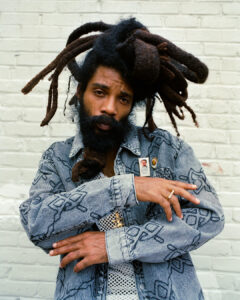
Starting his reggae journey as Protoje’s DJ, Yaadcore is now making a name as a singer and producer in his own right, collaborating with both new and Foundation artists.
“I started out as a party DJ at 14, playing dancehall and hip hop. But by 2012, I was on the early journey of Rastafari, and it led me away from dancehall. I also met Protoje in 2010. Becoming his DJ convinced me that it was time to make the transition to conscious music.
“It was a joy. I started playing a mixture of old and new roots. Dubwise Jamaica, the event I started in 2013, was one of the only places you could hear new reggae. We played artists like the Chantells, Prince Alla, Max Romeo, and the youth that were coming up—Daweh Congo, Sizzla Kalonji, Pentateuch, Chronixx, Protoje, Raging Fyah, Jah 9. Different artists would perform for free—we had Ninjaman, Prince Alla, Johnny Clarke, the list goes on! It was a blessed time.
“As a DJ, I was always looking at how to grow my craft, so when I discovered that Mikey Dread was a reggae DJ, a producer, and then an artist, it inspired me. I started singing a few lines to the riddim versions on my DJ sets, and one day I decided to write a full song.
“I launched my label, 12 Yaad Records, in 2017 with No Fenke Fenke featuring Shanique Marie & Kabaka Pyramid, followed by my own single, Ready Now. I released my first album in 2022. Last November, I released a riddim juggling, Bogan Villa Riddim, with Sizzla, his son Meleku, and the legendary Fred Locks. I have many more productions in the pipeline.
“Any riddim you hear me on is a conversation with the riddim. Whatever the riddim is saying inspires the style. With my recent single, Sitting in the Park, I just found myself singing a similar melody in a song I was writing. I decided to demo it and linked up with Natural High to create a new beat.
“The forthcoming EP is a reggae vibe for sure. We have a modern Nyabinghi vibe, some rubadub, some rocksteady, some original modern reggae, and there’s a collaboration with Capleton. It’s a really good mixture.
“Reggae is a special music. Coming from such a small island, it’s crazy to see the impact it’s had on people’s lives, as well as the music industry and other genres. I’ve been all over the world and seen how people love it! It’s like a seed that’s sown and cannot die.
“In terms of honoring the legacy, as far as me as an artist is concerned, it is to uphold the morals reggae music stands for and keep going so we can inspire the generations to come. As far as the industry is concerned, its role would be to help those Jamaican artists who never get what is due to them, or to fund initiatives to start music lessons in schools. For instance, reggae could become a licensed genre, so that if anyone outside Jamaica wanted to host a reggae festival, they’d have to pay some form of taxation to the country that created the genre. The Jamaican government should really be responsible for setting certain infrastructures.
“What reggae needs is investment. You need money to market a product to young people. Our genre isn’t pushed because it highlights things the powers that be don’t want highlighted. But we’re still here, fighting the fight and finding ways to harness the financial element. Nothing happens overnight, and seeing my growth and progression in the fanbase since becoming an artist is definitely a good sign for what the future holds.”
*See lyrics to Yaadcore’s Reggaeland
The Musician/Producer – Zak Gold (26) Full Cxrcle band/Eclectic Productionz – LONDON
‘We can never be diminished’
Zak with Etana, Reggae Land backstage (image courtesy of the artist)

Zak learned the guitar as a child and was producing music as a teenager. Full Cxrcle is already the backing band of choice for visiting stars such as Etana, and Zak is composing for up-and-coming artists, such as Jah Lil and Blvk H3ro (Black Hero).
“My dad is a musician and there were always guitars lying around the house. When I was about seven, I picked up a guitar and started from there.
“When I got to secondary school, I taught myself keyboard and drums. I was in a band with a couple of school friends. Now I play bass, keys, drums and percussion, and produce music.
“I didn’t start playing live until around six years ago when I joined a band with Rassi Hardknocks. We rehearsed week in, week out and did one show in April 2020. The day after was the Covid lockdown. I didn’t play live again until I formed Reggae Street in 2022. We covered songs by Bob Marley and the Wailers, and got a residency at the Fiddler’s Elbow in Camden.
“My goal was not to be just a band but to be THE backing band for when Jamaican artists come over. There aren’t many, when you think how reggae has evolved. The music hasn’t lost its essence, but everything is fusion now – you have pieces of jazz, Afrobeat – and not many musicians move with the times.
“In September 2022, I saw Aswad play in Shepherds Bush and put a clip on Instagram. The keyboard player, Andre Hall, saw it and we started speaking. I was asking him everything about the show because, when it comes to music, I like to go in depth. We kept the link and he invited me to do a BBC Radio 1Xtra session at the iconic Maida Vale Studios, for a UK dancehall showcase.
“In April 2023, Delroy, the drummer in Reggae Street with me, reached out to Etana’s manager as she had a couple of UK shows. Andre did it with us. Afterwards, things took off. Reggae Street came to an end and, eventually, Full Cxrcle was born.
“Our first gig as Full Cxrcle was to support Shaggy! It was a BBC Radio 1Xtra Live Lounge with millions of YouTube views. It was an honour to play with such an established, popular artist, as early on as I did. Forever grateful. Since then, we’ve supported Lila Iké, Jaz Elise, Sevana, Queen Ifrica and more. We played with Spragga Benz, too, and Everton Blender at Reggae Land Festival 2025. Playing with Mad Professor and Sandra Cross was another great moment.
“I started producing and composing music when I was still at school, and I’m keeping at it. Trying to juggle the production side whilst being a busy musician is hard, but it’s something I’m working on! We have some songs with Etana, and a lot of good quality productions bubbling on the hard drive for whenever we can get the right artists. The plan is to get all the fresh, talented artists we can, voice them with good quality sound and push them. During City Splash, we worked with a young artist called Ras I, and I have a riddim on Blvk H3ro’s wicked forthcoming album. Jaz Elise, Aleighcia Scott, MediSun – there are so many talented young artists.
“My wish is to have a collective of everybody: musicians, producers, promoters etc. With a collective, artists could come straight to us instead of having to use a middleman. In.Digg.Nation is a good example. You need people at the top who understand the business.
“We need an infrastructure for reggae to truly thrive over here, but that’s not to say reggae isn’t doing well. Did you see the last Reggae Land lineup? It was unbelievable. Everyone from old school to new school. I’m proud to see that. Reggae deserves to be at the top after all the hard work and sacrifice that’s gone into it over the years.
“It’s true that most Black music pushed by major labels portrays negativity, and not so much of the positivity and upliftment that comes with music like reggae. I could do a drill rap in five minutes and get a million views. But the good music is there, too, even if it’s not pushed in the mainstream – and it is big. No matter what crap ‘they’ try to push, they can never diminish us.”
The Radio and Festival DJ – DJ Kat the Kat-a-lyst (32) – COVENTRY
‘The elders’ sacrifice has paved the way for reggae across the world’
DJ Kat the Kat-a-lyst (image courtesy of the artist)
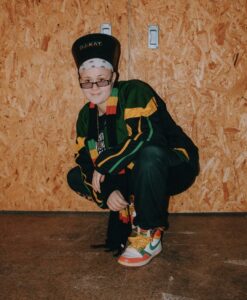
We met DJ Kat the Kat-a-lyst from Sisters in Dub in Blog 4, and Kat is a respected artist in her own right, too, with solo gigs across the world and five radio shows. She’s also a poet and djembe-player and, as a light-skinned woman of Jamaican heritage, has discovered the power of ‘being different’ to inspire change.
“I thought I was Caucasian until I met my Jamaican granddad and my uncle at the age of 16. It was a humbling experience and from there, I wanted to find out who I was. I started to educate myself with the music, learning about people like Marcus Garvey and Leonard Howell and their impact. I wanted to continue their legacy.
“At school, I would express my identity with my dress and Afro hair, but people couldn’t always accept that I was Caribbean because my skin is so light, and I was bullied. Even the teachers tried to fit me in a box, but I didn’t fit into anything.
“My family is Caribbean, English and Scottish and each side had its own, ‘you’re too light to do this, too dark to do that’. The music broke through those barriers. Listening to artists like Bob Marley, Garnett Silk and Steel Pulse clarified things for me, and I decided it would be great to play reggae to people who didn’t know it, or who were very light skinned like me and may not know which way to turn.
“Hillz FM was the first radio station I went on, in 2009, and from Hillz I was approached by Vanny Radio. Then, in 2018, with a focus on Caribbean music, I was approached by Arawak Radio. Today, I’m still with Arawak plus four other internet stations with listeners worldwide.
“In 2018, I wrote a poem entitled ‘I’m Light Skin’ after I was racially abused by a Black person and a White person on the same day. I was upset and frustrated, so I decided to write what I was feeling and some of the weird questions I get asked. Benjamin Zephaniah heard it and he said: ‘There will be other people feeling like you, so keep pushing.’
“Now, I realise how important it is to embrace my own power. Difference is what has created change through history. I seek inspiration from this, and it keeps me motivated.”
Today, Kat is a sought-after presenter with shows on Arawak Radio, Reggae Storm, Imperial Voice, More Muzic 360 and Esencia Urbana in Panama. She includes new artists (DJ Kat’s Top 5), Foundation music, poetry and interviews. “I play for people to hear the messages,” she says. “The early artists were singing about reality, and to know that our elders were killed for being Black or wearing locks sends chills down my spine. We must not forget that their sacrifice is what has paved the way for reggae across the world.
“Many of my listeners are in the Caribbean and Africa, as well as Canada and America and I feel proud because I think it was Bob Marley’s mission to bring reggae to the Black diaspora. If I can help, it means a lot to me.”
With regular high-profile engagements – including opening for Eek-A-Mouse in Norway last year and playing for Lloyd Coxsone, Aba Shanti and others – Kat is not afraid to take a principled stand and turn festivals down, significantly spurning Glastonbury in 2025.
“Obviously, Glastonbury is a name but there are things I disagree with in terms of what they promote, like drugs and drink. It doesn’t seem to match what we’re playing. It’s the same with many festivals, even those with ‘reggae’ in the title.
“I’m a big believer in reggae bringing people together, but I also feel something should go back to the pioneers. There are so many artists, especially Foundation artists, living in poverty, and it doesn’t feel right.
“Reggae has reached unprecedented levels of popularity, in Europe especially, so perhaps something structural could be done where a percentage of each ticket sale would go to the originators, or to a youth foundation to encourage the next generation of the music.”
The Radio DJ – Josh Day (38) – SUFFOLK
‘I delve until I find something that resonates’
Josh Day on air (image courtesy of Josh Day)
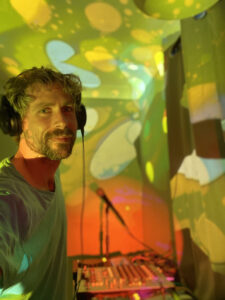
Inspired by music he heard in the West Country during the 2010s, Josh presents Trade Wind Sounds, a beautifully curated African music and roots reggae show on Soul Roots Radio.
“I got into reggae at uni in Plymouth 20 years ago. I discovered a southwest version of sound system – people putting rigs up on the moor. It wasn’t roots music, but it had a real inclusivity.
“I discovered dub at the end of uni. There were new producers like Prince Fatty and Mungo’s HiFi and bands like The Skints and Natty. There was also the new wave of reggae – young Jamaicans with a different sound. We were going to festivals like Boomtown and Glastonbury, seeing artists like Jesse Royal, Chronixx, Protoje and Kabaka Pyramid.
“There were big reggae nights at Crasken Farm in Helston playing roots and dancehall with selectors and MCs. Sound systems included Konquerin Soundz, No Ice Cream, Pinnacle and Washing Machine. Pressure Roots Hi-Fi put on legendary dub nights at Falmouth Rugby Club – I remember the glasses vibrating off the shelves from the bass.
“Gigs at Porthtowan Eco Park along with the Tropical Pressure festival influenced my musical journey towards World Music. I’m grateful to co-founder, Tim Stirrup, for bringing artists from all over the world to the depths of Cornwall and creating a vibrant community. The Cornish Bank in Falmouth has also been prolific in grassroots, world music and arts events.
“I moved to Suffolk in 2019. Magnificent Biscuits was playing in a pub. He had a show on Soul Roots Radio and I’d tune in every Sunday. I related to his music – he’d start with jazzy world music and before you knew it, you’d be dancing around to more upbeat Afrobeat, reggae and other styles. He invited me to host a show on the station. Trade Wind Sounds is a duo with an old friend, Ross. I’ve also built my own sound system under the same name and have regular nights in Lowestoft and Norwich.
“I play a mixture of African and reggae, old and new. I delve until I find something that resonates. I harness the power of the internet and Instagram connections. I love guitar. Africans often play rhythms so differently, which I find captivating.
“New reggae artists I’m following include Zulu Vibes and Joe Yorke along with Waggle Dance Records, Shaolin Records, Room in the Sky (RITS), Evidence Music (Geneva) and Lone Ark in Spain. They tend to work with both Foundation and new artists, often making new versions of old songs and, in the case of the studios, producing new recordings by old bands.
“Growing up where I did, there is a certain ignorance about what life was like for African-Caribbean elders in the UK and Jamaica, and I appreciate being informed of the trauma they suffered. Personally, I like how the genre is evolving with modern influences. Likewise, being reminded of what the music came out of reinforces why it should never be taken for granted.”
Trade Wind Sounds plays on Soul Roots Radio every other Monday evening and occasional Sundays. You can also catch Selector Becca playing World Reggae every four weeks on a Sunday.
instagram.com/trade.wind.sounds
The Producer/Musician – Mikey Shaw (31) Dub Cavern – NORWICH
‘I love hearing modern singers in reggae and dub’
Mikey in the studio
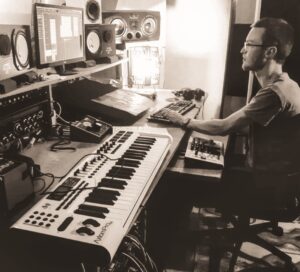
Mikey was playing drums for a gigging band at 12, before joining Norwich band, the Piratones, moving in with them and setting up a studio in the living room at 17.
“I’ve been running the Dub Cavern almost since that time,” he says. “I was recording bands at 18, and I haven’t stopped. Over recent years, my job has become very reggae-focussed. I work in all genres as an engineer, but reggae and dub are my passion in terms of production and mixing. I’m also a drummer. I started out in a dub/rock band called Solko but now most of my drumming is studio based – session recording for producers and bands.
“The softer style of dub and soul, like Fat Freddy’s Drop, were my gateway into reggae. Then I got into harder styles like Zion Train and steppas before finding roots. I’m obsessed with the Roots Radics, that whole era. Steel Pulse has probably been the most influential band – blending different styles and production elements while still sounding like roots reggae. I’m a fan of Prince Fatty, also.
“Dub is a genre that most producers enjoy. You’re listening as much to the musicians playing a groove as to a mix and a re-creation happening in real time, usually by a mixing engineer and a producer. As an experimental producer, that’s what has always called out to me.
“I love modern singers in reggae and dub, and most of my work is in this sphere. I like hearing artists like Holly Cook and Shneice fusing reggae with other styles, such as soul and disco. I also enjoy hearing artists recreating 70s and 80s reggae and dub and pulling it off well.
“As well as producing my own music, which is a mix of old school-sounding roots, modern roots and crossover styles, I work with record labels. These include Shaolin Sounds – Daniel Tufts in Norwich. He works with all manner of producers and artists – classic Jamaican and British singers who were big in the 70s onwards. He puts out two 10in vinyl releases a month and most of that comes through my studio.
“Earl 16 and Horseman have been in recently and I’ve been working with Shniece remotely. Horseman was recording onto an album for a producer called JoJo Gladdy, being released through Shaolin. JoJo writes tunes in a very Roots Radics fashion and we were getting them voiced by different singers. Horseman came in to record the drums to lay over that album. We have a real drum kit in a real room, so it’s a proper sound.
“Horseman is probably my biggest inspiration as a studio reggae drummer – I can tell it’s him just by the way he plays the hi hat. Big legends coming to the studio scares the crap out of me – but he was just the nicest, most relaxed man, happy to see some young guys in Norwich making reggae and trying to make it authentic. Earl 16 was really into the music we were creating, too. So, it’s been affirming to see these older guys who weren’t gatekeeping authenticity – or maybe they were, and they were impressed with us. There was no sense of hierarchy, just a mutual respect.
“I’ve also ended up moderating a Facebook group called Dub Producers with about 20K members worldwide. Scientist himself is on the forum and I’m happy that there is this archive of knowledge – everyone discussing reggae and dub, recording, mixing, producing-histories, artists and engineers. It has affirmed to me that the genre will continue far into the future, with awareness, respect and reference to the great pioneers so that their work will be preserved.
“I mentioned Prince Fatty. I really enjoy how he blends vintage-inspired sounds with a kind of modern high fidelity. ‘Doing it right’ for me is the sweet spot of fusing the modern with the old and getting the sound right.”
instagram.com/dub_cavern_mikey
Each One Teach One, Hackney: music as a Trojan horse for our times
As I approached the end of this article in August 2025, I was invited to a sound system-build in Hackney, London. There, I interviewed project leader, Jaden Osei-Bonsu (31), Head of Youth Programmes at the Centre for Knowledge Equity, which funded the project.
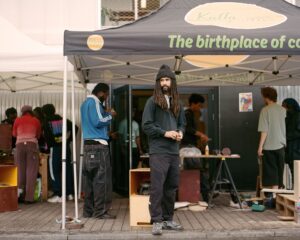
Jaden at the Sound System build, image © Adïam Yemane (IG: adiamyemane_)
Each One Teach One (E1T1) is an intergenerational project running since 2024. The aim is to empower young people through music by linking them with elders to learn about sound system history and culture, and connecting those from the Black diaspora with their roots. The two-week sound system build was the culmination of a lively programme of events, including visits from sound systems and DJs such as Jah Youth, Lionbeat, Channel One, and the Heartless Crew.
Says Jaden:
“Early in 2025, I linked up with Mark from Felt Sound System and we started looking at building our own sound system over the summer. It would be put together by young people, then owned by the community. Through participating, the youngsters would learn if they wanted to be selectors, DJs, or engineers, or if they wanted to hold reasonings—we can facilitate space for that as well.
“Since E1T1 launched, we’ve been building an ecosystem through sound, and in the times we’re in, with the rise of the Reform party, music is our Trojan horse. It can reach the places that politicians can’t and exert influence in a different way.
“Music has always been at the forefront of change—Nina Simone lived across the road from Malcolm X. Whereas now they’re saying you’re not allowed to mention politics in music. No! We need artists to talk about what’s going on. Yes, artists are being dropped by their labels for speaking out, but if the community said, ‘we’ve got you, we’ll pay for your album if you sing on our behalf,’ then artists would be able to speak. [1]
“I just came back from the Shambala and Forwards festivals. You’ve got all this energy and it’s like, Yo! If we had that daily, we could actually effect change. Instead, people tend to go back to their daily lives because capitalism makes us individualistic. But see this: we’ve been building our sound system for two weeks. People have been giving their time, their energy, and their joy, and they want to believe in something. We must go back to the root of community: coming together, learning our history, and building on what has already begun.
“Sound system culture is a beautiful narrative that takes you on a journey of resistance into liberation. I want to push that forward. The first event we threw, we had 50 youths from my estate and everyone had beef with each other. But for one day we had peace. How beautiful that was. This is bringing everyone together through sound and music. It’s critical for peace and liberation.”
Jaden is seeking people to get involved with Each One Teach One. Contact him at jaden@knowledgeequity.org / Tel. +44 07427 653450
Concluding thoughts
I’ve learned a lot through writing this series. I’ve discovered how a variety of young people came to 70s and 80s reggae and what they are doing with it. While some, like Brixton Downbeat (Blog 4), play the music in its purest form, others, like Dub Cavern Mikey, are experimenting with it while affording the genre the greatest respect.
Two years ago, I thought ‘new reggae’ was mainly steppas. I’ve now learned there are myriad styles, coming from all around the world. Some of these are quite beautiful and it’s been instructive to listen to radio shows like Trade Wind Sounds to find out more.
As Yaadcore and DJ Kat-the-Katalyst point out, reggae is now an unstoppable force across the globe. Whether the genre and its legacy will be honoured appropriately, only time will tell, but the signs are positive. Nearly every young person I interviewed spoke about how the elders’ hard work and sacrifice has brought today’s opportunities. Several want to see remuneration for pioneer artists and funding for the next generation to carry reggae forward.
Others are focusing on education, and it was wonderful to close the series with the words of Jaden Osei-Bonsu. Times have tragically changed since I’ve been writing the blogs, the rise of the right and associated racism contaminating the minds of many. We must support projects like Each One Teach One in Hackney which connect young people with their histories and use music and sound system to promote equal rights, justice and love. For it seems, in these troubling times, that the issue is no longer just how to protect the legacy of reggae, but also how reggae can help to protect crucial core values, both on an individual basis and for us as a nation.
About the author:
Becca Leathlean is a writer and teacher with a long-term love of roots reggae. She returned to London in July 2022 to take up opportunities as a vinyl DJ and to present a world-reggae radio show.
Notes
[1] Jaden is also a co-founder of the Silhouettes Project, supporting emerging artists and producers to develop their craft through creative collaboration, in a celebration of collective strength. He also performs with them as a rapper. instagram.com/eerf_evil