
Tasmania’s First Custom-Built Reggae Sound System
The SST research has explored sound system scenes across different continents to trace the spread of what we call the electromagnetic diaspora. Australia is one of the countries where this phenomenon has only recently taken root, yet its presence is steadily growing, extending even to the remote island state of Tasmania. In this archive blog, Moses Iten reports on South Weight’s HiFi, Tasmania’s first sound system, launched in 2024.
by Moses Iten
This account follows a year of participant observation with the two builders/owner-operators of South Weight Hi-Fi, the first custom-built reggae/bass sound system in Australia’s isolated island state of Tasmania, which is roughly the size of Ireland and has a population of half a million. I arrived in Tasmania after almost two decades in Melbourne, where I had established myself as a DJ/producer and been part of the sound system community. There were a handful of custom-built sound systems in the 2000s when I arrived there but by the time I left in early 2022, had grown to over two dozen with more having been built since [1]. This boom is no surprise in what has been proclaimed the world capital of live music, as Melbourne outranks cities like New York and London per-capita, which researchers have attributed in large part to huge immigration and the resulting multiculturalism (Homan, O’Hanlon, Strong and Tebbutt 2022: 1).
On the other side, Tasmania is the country’s least culturally diverse state. Its isolation and a stagnant economy for much of the 20th century have meant there has been little population growth [2]. Nevertheless, before leaving Melbourne I’d heard—from local veteran owner-operator Adrian Hough of Adrian’s Wall Sound System—that he’d been offering advice to some Tasmanians interested in building a sound system. I established contact with the builders Paul McGough and Tom Ray soon after arriving and began following their progress of building the island’s first reggae sound system. The sound system launched on 10 February 2024 and two weeks later we collaborated on four days of sessions, which I had facilitated to happen as part of Hobart’s MONA FOMA festival [3].
South Weight Hi-Fi was first publicised on 30 May 2022, via an Instagram post showing an order for speaker drivers from a French company specializing in DiY audio equipment (see Figure 1). Subsequent Instagram posts over the following months showed the arrival in McGough’s workshop of various components (Figure 2) and the building process (Figures 3 and 4). Their second post, however, featured a photo from the seminal Heavy Congress event in Melbourne, featuring ten sound systems under one roof, which McGough and Ray attended to party but also to research and connect with the Melbourne-based sound system community. This duo are veterans of more than two decades of professional involvement in nightlife and music. Like numerous young Tasmanians, McGough had relocated to Melbourne for almost twenty years, before returning to the island. Ray aka DJ Thensum had stayed, becoming one of Hobart’s best-known professional DJs, an instrumental figure in the development of local hip hop especially collaborating with various MCs and other DJs [4]. Back in the 2000s, Ray had been co-owner of Hobart’s premier (and only) DJ-focused record store Ruffcut Records, which was at the heart of the tight-knit local DJ community.
There are not many here in Tasmania who truly understand what this sound system represents, McGough admitted in one of our first conversations. The sound system was not being built for a particular diaspora such as those in London, or even in response to a growing popularity of reggae and bass music on a local level. It was built due to the passion of the two individuals who felt there needed to be a local manifestation of the musical culture they love. In this way, they are pioneers, much like many Australian pioneers in building the first reggae sound systems in the larger population centres of Melbourne and Sydney two decades earlier.
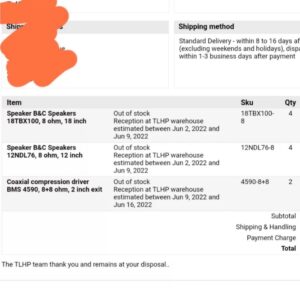
Figure 1: Purchase receipt. From SWHIFI IG account, 30 May 2022.
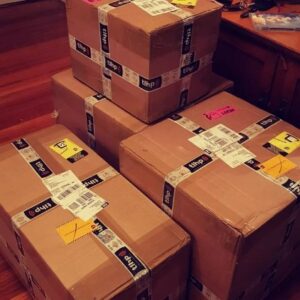
Figure 2: Arrival of components. From SWHIFI IG account, 7 July 2022.
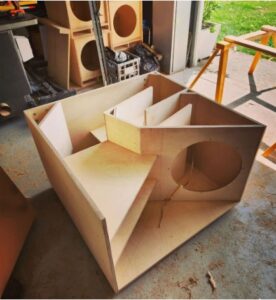
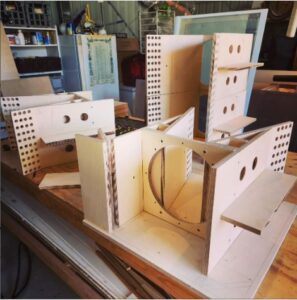
Figures 3 and 4: Speaker boxes being built in the workshop. From SWHIFI IG account, 11 February 2023 and 17 September 2023.
South Weight HiFi was built as a local manifestation of Jamaican roots reggae and UK bass music. Reggae has never been very visible in Tasmania, where locals are accustomed to travelling to Melbourne for the opportunity to witness international touring reggae and dancehall artists from Jamaica or the UK. Hence, building Tasmania’s first and only custom-built sound system creates a new dedicated space for a local reggae-bass community to rally around and build. “South” represents being Australia’s and perhaps the world’s southernmost reggae sound system. “Weight” refers to the tactile power of the lowest frequencies, the power of which provides the principal reason for custom-building a “bass culture” sound system (Henriques 2011: 12-19). “Hi-Fi” refers to the high-quality reproduction of sound to which builders aspire, associating their sound systems with high precision technological equipment.
Indeed, the builders of South Weight Hi-Fi opted to build a sound system of the highest quality using new components and seeking out the advice from a previous generation of builders, including the above mentioned veteran builder Adrian Hough. After one of my visits to McGough’s workshop south of Hobart, he was expecting a call from Josh Sasquatch aka Spherix, who had just completed building Sasquatch Sound in the small coastal town of Torquay, south of Melbourne. Josh was a reggae and bass music obsessive who decided to build his own sound system after a trip to Jamaica in 2012, where he witnessed hand-built sound systems [5]. Upon returning to Australia, he reached out to one of the pioneers in Adrian Hough, who then also gave him advice. Josh immediately commenced to build “two scoops with help from a furniture/joinery friend and had rudimentary mids and tops made from old shit I had lying around and some made up box style”, as posted in 2022 on the online forum ‘Speakerplans’, where sound system builders share their knowledge with their peers across the globe [6]. Josh further announced: “It didnt really cut it besides for small parties at home at at friends. This year I decided to finish my project, so figured I’d share some of the build here.” In these ways, sound system know-how is passed on in the sound system community throughout Australia, as previous generations of builders share their experience, contact and at times also sell bits of their gear. Nevertheless, every sound system aims to be a unique product of craftsmanship (Sennett 2008). This can involve ongoing tinkering and manipulation as the technology is part of a lifelong apprenticeship of “learning to listen” (Henriques 2011: 88-98).
The significance of being Tasmania’s first sound system dedicated to reggae roots and bass music motivated McGough and Ray in the design of their logo, which is featured in the sound system itself on a lightbox, which also adds to their live performance. Their logo was designed in consultation with Hobart-based Seb Godfrey (https://www.instagram.com/sebgodfrey/), featuring a Tasmanian devil with a crown (see Figure 5). This is inspired by the Lion of Judah revered in the Jamaican Rastafari faith as representing the Emperor Haile Selassie I (Stratford 2011: 150) as well as being a symbol of strength, kingship, pride and African sovereignty. “It should be emphasized that in Rasta symbolism, the dreadlocks also represent the Lion of Judah’s mane” (Kroubo Dagnini 2009: 22). McGough and Ray told me they hope Rastafari and Jamaicans in general would take their replacement of the lion with the iconic Tasmanian devil in good faith, professing their great respect for Jamaican roots reggae. I offered to take some stickers on an upcoming trip to Sydney where I had arranged to meet Jamaican Rastafari sound system owner-operator JJ Roberts of Soulmaker Sound System (established in 1974), who gave his thumbs up to their logo, impressed to hear reggae is gaining foothold on the island state.

Figure 5: South Weight Hi-Fi logo by Seb Godfrey.
While McGough and Ray were busy building their sound system, I had approached Tasmania’s internationally renowned cultural institution MONA (Museum of Old and New Art) about the idea of a sound system event in their expansive grounds. They eventually booked South Weight Hi-Fi to host four days of sessions inside the gigantic concrete and steel structure of Amarna “kind of like what God would do if he decided to build a gazebo”, designed by US-American James Turrell to “harness the numinous potential of light and space”, as stated on the MONA website [7]. This booking happened before South Weight had been completed, but gave them the resolve (and finances) to speed up the building process and test the sound system (Figure 6). South Weight Hi-Fi was completed in February 2024 just two weeks before the festival and the well-attended all-day launch event featured dedicated reggae, dub and drum ‘n’ bass heads to psytrance ravers representing a diverse crowd, some of whom had been revellers for more than thirty years alongside scores of children being introduced to the sonic spectrum of a custom-build sound system for the first time in Tasmania.
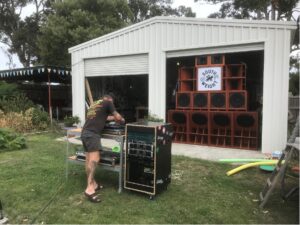
Figure 6: South Weight Hi-Fi being tested at the workshop of Paul McGough, February 2024. Photo by Moses Iten.
MONA announced South Weight Hi-Fi as part of their flagship summer festival MONA FOMA as “a rotating cast of local DJs…take their talents to ‘Australia’s southernmost custom-built sound system’: mobile disco; radio station; sonic laboratory; place for the congregation of revellers; you name it. Expect big beats” [8]. The space chosen for the South Weight Hi-Fi sessions was US artist James Turrell’s large scale architectural installation Amarna, which according to MONA’s publicists “harnesses the numinous potential of light and space; kind of like what God would do if He had a degree in architecture” [9]. Situating a sound system in this context of a major arts institution meant waves of museum crowds came to marvel at South Weight Hi-Fi as a sculpture, as an installation (see Figure 7).
The South Weight Hi-Fi owner-operators Ray aka DJ Thensum and McGough aka Operator P selecting heavy bass beats and roots reggae/dub respectively, alongside futurist bass DJ Adam Joseph aka A13; dancehall selector Sophia Di Venuto aka So Fire; hip hop and reggae DJ Andrew McKay aka Andrew M and myself selecting cumbia and Afro-Latin bass records (see Figures 8 and 9). While all of the selectors are based in the south of Tasmania, most of us had spent a considerable amount of time living interstate and/or overseas, bringing our collective experience and music collections to Tasmania. While I only observed a small percentage of the crowd who seemed familiar with sound system culture, there were reggae heads there who returned again the following days, coming to talk to us selectors about how much this meant to them. I was given a USB stick full of digitised rare reggae roots tracks from a record collector and DJ who had recently moved here from Brisbane, where he used to host touring reggae artists from the UK. There were many families with children and big smiles. The feedback from MONA’s music team is that they want to feature more sound system activity at the museum and hope to see an even greater diversity of DJs and musical selections represented in the future. Regrettably this is unlikely to happen as some weeks after the festival MONA announced the cancellation of the festival after sixteen years [10]. The journey of Tasmania’s first custom-built reggae/bass sound system has just begun, as South Weight Hi-Fi continues to build the local community which has not had a focal point for the scene before.
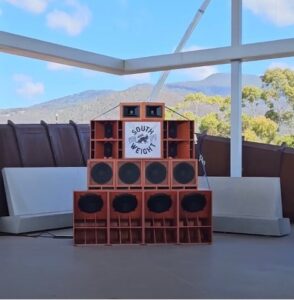
Figure 7: South Weight Hi-Fi installed at Amarna, MONA.
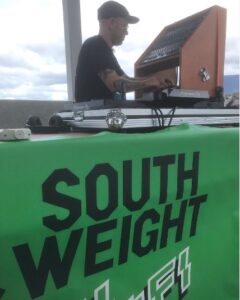
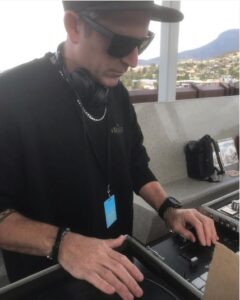
Figures 8 and 9: Paul McGough aka Operator P and Tom Ray aka DJ Thensum performing at MONA FOMA. Photos by the author.
About the author
Dr Moses Iten is a researcher and DJ/producer (aka Cumbia Cosmonauts) based in Australia. He investigated the roots of digital cumbia music in Mexico’s sonidero culture for his PhD and has recently been appointed the Managing Editor of Dancecult: Journal of Electronic Dance Music Culture.
Notes
[1] ‘Heavy Congress: Convergence of Sound System Tribes’ on this blog at https://sonic-street-technologies.com/heavy-congress-convergence-of-sound-system-tribes/
[2] Pan, Charlotte. ‘Which are the most culturally diverse areas in Australia?’ at EdgeRed Analytics, published Jan 24, 2023. https://www.edgered.com.au/post/which-are-the-most-culturally-diverse-areas-in-australia, accessed 30 April 2024.
[3] https://monafoma.net.au/program/south-weight-hi-fi-sound-system, accessed April 30, 2024.
[4] https://www.instagram.com/dj_thensum/, accessed April 30, 2024.
[5] See Sasquatch Sound on the Sonic Map, https://sonic-street-technologies.com/sstmap/#.
[6] https://forum.speakerplans.com/sasquatch-sound-build-torquay-vic-australia_topic107321.html, accessed April 30, 2024.
[7] https://mona.net.au/stuff-to-do/james-turrell-amarna, accessed April 30, 2024.
[8] https://monafoma.net.au/program/south-weight-hi-fi-sound-system, accessed April 30, 2024.
[9] https://mona.net.au/stuff-to-do/art/james-turrell-armana, accessed April 30, 2024.
[10] https://mona.net.au/blog/2024/04/sun-sets-on-mona-foma, accessed April 30, 2024.
References
Henriques, Julian. 2011. Sonic Bodies: Reggae Sound Systems, Performance Techniques and Ways of Knowing. London and New York: Continuum.
Homan, Shane, Seamus O’Hanlon, Catherine Strong and John Tebbutt. 2022. Music City Melbourne: Urban Culture, History and Policy. New York, London and Dublin: Bloomsbury Academic.
Kroubo Dagnini, Jérémie. ‘Rastafari: Alternative Religion and Resistance against “White” Christianity ‘. Études caribéennes (online), 12 April 2009. http://journals.openedition.org/etudescaribeennes/3665, accessed 30 April 2024.
Sennett, Richard. 2009. The Craftsman. London: Penguin Books.
Stratford, M. E. (2011). Image, identity and the Rastafari movement in Ethiopia. The International Journal of the Image, 1(3), 147-154.